How to Make a Scanned PDF Smaller for Online Applications
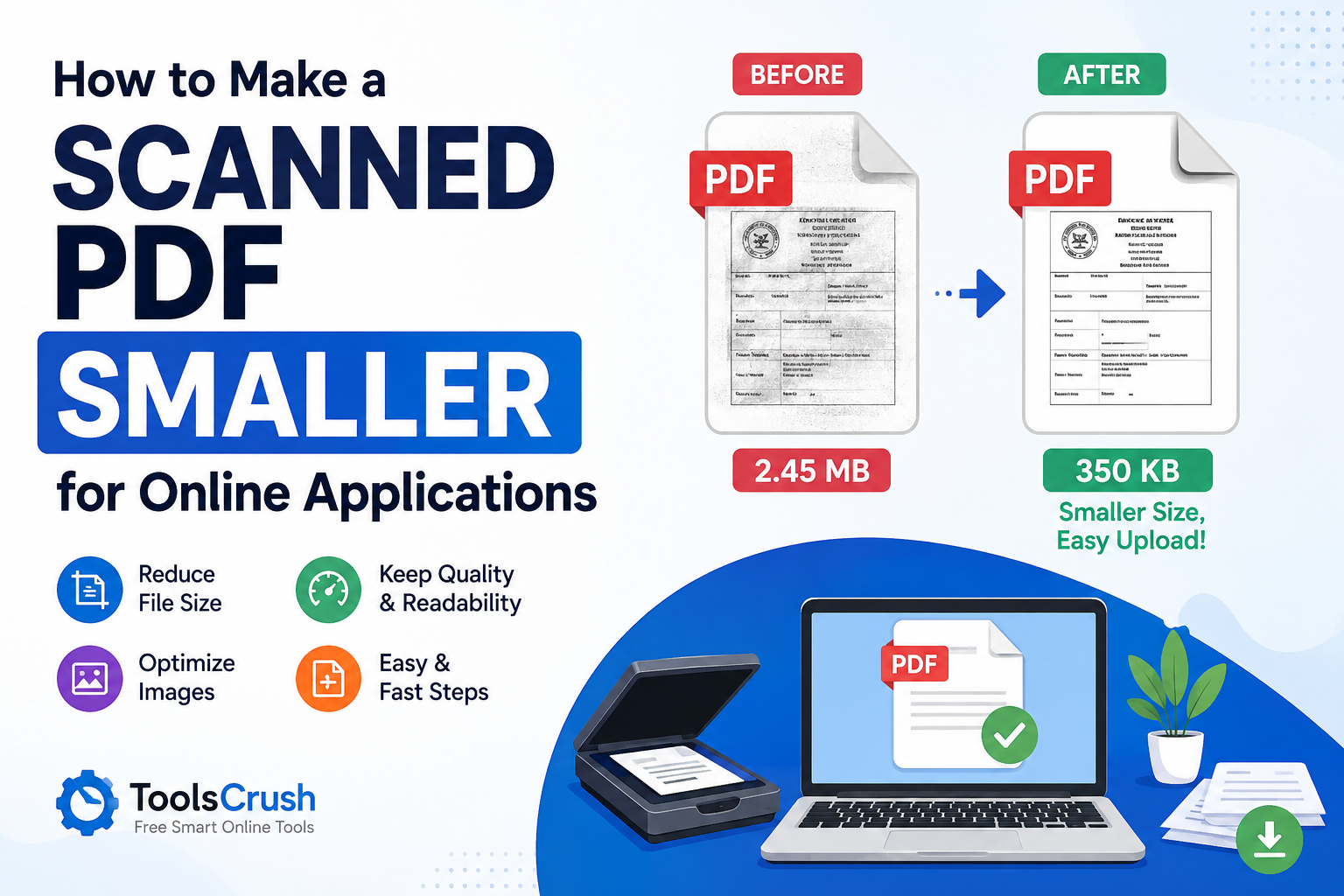
A scanned PDF can become surprisingly large, especially when it contains high-resolution images, color pages, or documents scanned at a high DPI. If an online application has a strict file-size limit, such as 200KB, 300KB, 400KB, or 500KB, a large scanned PDF may be rejected during upload.
So, how do you make a scanned PDF smaller for an online application? The most effective approach is to remove unnecessary pages, reduce excessive image resolution, use grayscale when appropriate, compress embedded images, and optimize the PDF while keeping important text, signatures, stamps, and document details readable.
How to Make a Scanned PDF Smaller ?
A scanned PDF is a digital document created by scanning one or more physical pages and saving the resulting images inside a PDF file. Unlike many text-based PDFs, a scanned document often stores each page as an image. This means its file size depends heavily on factors such as image dimensions, resolution, DPI, color depth, compression, and number of pages.
For example, a multi-page document scanned in high-resolution color can become several megabytes even when the original paper document contains mostly text. This is why a PDF that looks simple on screen can still exceed the upload limit of an online application.
Why Is My Scanned PDF So Large?
The most common reasons a scanned PDF becomes large include:
- High scanning resolution or DPI
- Full-color pages containing unnecessary image data
- Large image dimensions
- Inefficient image compression
- Multiple scanned pages
- Photographs, signatures, stamps, or graphics
- Blank or duplicate pages
Before reducing the file size, check the application’s current upload requirement. If the PDF exceeds the allowed size, optimize and compress it while protecting the readability of the information the application requires.
How to Reduce a Scanned PDF Size: Step-by-Step
If your scanned PDF is too large for an online application, you can usually reduce its file size without making the document unreadable. The best approach depends on the number of pages, image quality, resolution, color content, and the maximum file size allowed by the application.
1. Check the Original PDF Size
Start by checking the current size of your scanned PDF. For example, if the application allows a maximum of 400KB and your PDF is 2MB, you will need more than minor optimization. Knowing the original size also helps you measure how much compression is actually needed.
2. Remove Unnecessary Pages
Check the document for blank pages, duplicate scans, incorrect pages, or attachments that are not required. Removing unnecessary pages can immediately reduce the PDF size, particularly when every page contains a high-resolution scanned image.
3. Reduce Excessive Image Resolution
High-resolution scans contain more pixels and therefore more image data. Reducing oversized image dimensions or excessive resolution can significantly decrease the PDF file size.
However, avoid reducing the resolution too aggressively. Small text, signatures, stamps, dates, identification numbers, and other important details should remain clear and readable.
4. Use Grayscale When Appropriate
Color scans generally contain more information than grayscale scans. If your document mainly contains black text, forms, receipts, or similar content, grayscale can reduce the amount of image data while maintaining good readability.
Do not remove color when it is important for photographs, stamps, markings, signatures, or other information required by the application.
5. Compress the PDF
After optimizing the scanned images, compress the PDF to reduce unnecessary file data. Image-heavy PDFs often benefit more from image compression and resolution optimization than from simply removing metadata.
6. Check the Quality After Compression
Open the compressed PDF and inspect the important pages. Make sure text, signatures, stamps, photographs, dates, and document numbers remain clearly visible.
The objective is not to create the smallest possible PDF. It is to create a small, readable, complete, and application-ready document.
7. Verify the Final File Size
Finally, check the actual output size in KB or MB. If an application specifies a maximum file size, aim slightly below that limit rather than trying to reach the exact maximum.
For example, if the limit is 400KB, producing a file around 350–390KB provides a safer margin for upload.
How to Make a Scanned PDF Under 400KB
If an online application requires a PDF below 400KB, start by removing unnecessary pages and reducing oversized scan dimensions. For text-heavy documents, using grayscale where appropriate and applying moderate image compression can provide a good balance between file size and readability.
A practical workflow is:
Remove unnecessary pages → resize oversized images → use grayscale if suitable → compress images → optimize the PDF → check quality → measure the final size.
If the PDF is still larger than 400KB, reduce image dimensions or compression quality gradually rather than applying extremely strong compression immediately.
How to Reduce a Scanned PDF to 300KB or 200KB
Smaller file-size requirements usually require more aggressive optimization. A useful process is:
Remove unnecessary pages → resize scans → reduce unnecessary color information → compress images → optimize the PDF → inspect readability → measure the final size.
A text-heavy form may be easier to reduce to 200KB than a document containing photographs, detailed graphics, or several color pages. If important text, signatures, stamps, or images become blurry, increase the quality slightly and remove other unnecessary data instead.
What Is the Best DPI for a Scanned PDF?
There is no single DPI setting that works perfectly for every scanned document. DPI, or dots per inch, represents the resolution used when a physical document is scanned.
Higher DPI captures more detail but generally creates more image data and a larger PDF. Lower DPI can reduce file size but may make small text and fine details harder to read.
The best approach is to use only as much resolution as the document actually needs. For an online application, readability and compliance are usually more important than preserving unnecessary high-resolution image data.
File Size vs. Quality: What Should You Prioritize?
When compressing a scanned PDF, there is always a balance between file size and document quality.
| Document Type |
Recommended Optimization |
Main Priority |
| Text-heavy form |
Moderate compression + grayscale |
Readability |
| Receipt or invoice |
Resize + moderate compression |
Text clarity |
| Certificate |
Moderate compression |
Signatures and stamps |
| Photo-heavy document |
Resize images carefully |
Image quality |
| Multi-page scan |
Remove pages + compress images |
File size |
| 200–400KB requirement |
Resize + compression + quality check |
Compliance |
The smallest PDF is not necessarily the best PDF. A properly optimized document should be small enough for the upload requirement while keeping all important information clear and complete.
What If Your Scanned PDF Is Still Too Large?
If your scanned PDF remains above the required file-size limit after compression, optimize the source images before creating the final PDF. Large JPG or PNG images can contribute substantially to the overall document size.
A practical workflow is:
Compress the source image → resize excessive dimensions → create the PDF → compress the PDF → verify the final size.
If your scanned pages are JPG images, you can use the Image Compressor to reduce unnecessary image data before converting them into a PDF.
If you already have the scanned PDF, use the Compress PDF tool to reduce its size.
For scanned JPG images that need to be combined into a document, use the JPG to PDF Converter and then check the resulting PDF file size.
Can You Compress a Scanned PDF Without Losing Readability?
Yes, but compression involves a balance between file size and quality. Moderate optimization can remove unnecessary image data while preserving readable text and important document details.
Excessive compression may cause:
- Blurry text
- Pixelated signatures
- Faint stamps
- Reduced photograph quality
- Loss of fine details
For online applications, prioritize legibility and accuracy over extreme compression. Always open and inspect the final PDF before submitting it.
Can You Reduce a Scanned PDF Without Uploading Your Files?
Privacy can be important when processing identity documents, certificates, applications, invoices, and other personal paperwork. When choosing a PDF compression tool, check how it processes your files and whether processing can happen directly in the browser.
ToolsCrush provides browser-based PDF and image utilities for common document-processing tasks, allowing users to work with files from their device.
Frequently Asked Questions
How can I reduce the size of a scanned PDF?
Remove unnecessary pages, reduce excessive image resolution, use grayscale when appropriate, compress embedded images, and optimize the PDF. Always inspect the final document for readability.
How do I make a scanned PDF under 400KB?
Remove unnecessary pages, resize oversized scans, optimize image data, and compress the PDF. Check the final file size and make sure important text, signatures, and stamps remain readable.
How do I reduce a scanned PDF to 200KB?
Combine page removal, image resizing, grayscale conversion where appropriate, and PDF compression. The amount of optimization required depends on the original file size, number of pages, and image content.
Why is my scanned PDF larger than the original document?
A scanned PDF stores pages as digital images. High DPI, large image dimensions, full-color scanning, and multiple pages can create substantial amounts of image data.
Will compressing a scanned PDF reduce quality?
It can. Strong compression may make text, signatures, photographs, or stamps less clear. Use the lowest compression level that meets the required file-size limit while preserving important information.
Can I reduce a scanned PDF without losing readability?
Yes. Start with moderate optimization, remove unnecessary data, and reduce excessive image resolution before applying stronger compression. Always inspect the final PDF before submitting it.
For additional information about PDF documents, see Adobe’s PDF resources.
Make Your Scanned PDF Smaller With ToolsCrush
If your scanned PDF is too large for an online application, ToolsCrush provides browser-based PDF and image tools that can help you prepare the document before uploading it.
If you already have a large scanned PDF, start with the Compress PDF tool to reduce its file size.
If the PDF was created from large scanned JPG images, optimize the source images first with the Image Compressor. Reducing unnecessary image data before creating the PDF can make it easier to meet a strict file-size requirement.
If your scanned pages are JPG or JPEG files that need to be converted into a PDF, use the JPG to PDF Converter and then verify the size of the resulting document.
For a typical scanned-document workflow, follow:
Scan → Check File Size → Remove Unnecessary Pages → Optimize Images → Convert to PDF → Compress PDF → Check Quality → Measure File Size → Upload
The right approach depends on the original document, image quality, number of pages, and the application’s maximum upload size.
Related Tools for Scanned Documents
Depending on the format of your original document, different ToolsCrush utilities can help:
Using the appropriate tool at each stage can make it easier to meet a strict file-size requirement while maintaining document quality.
Final Takeaway
Making a scanned PDF smaller is not simply about achieving the lowest possible file size. The goal is to create a readable, complete, and compliant PDF that meets the application’s upload requirement.
Start by removing unnecessary pages and reducing excessive image data. Then optimize image resolution, use grayscale when appropriate, compress the PDF, and check the final document carefully.
The safest workflow is:
Optimize → Compress → Measure → Inspect → Submit
Whether an application requires a PDF under 200KB, 300KB, 400KB, 500KB, or another specified limit, always check the current requirements of the specific application and verify the final file before uploading.
A properly optimized scanned PDF should be small enough to upload, clear enough to read, and complete enough to satisfy the application’s document requirements.